Introduction: A New Cold‑War Flashpoint?
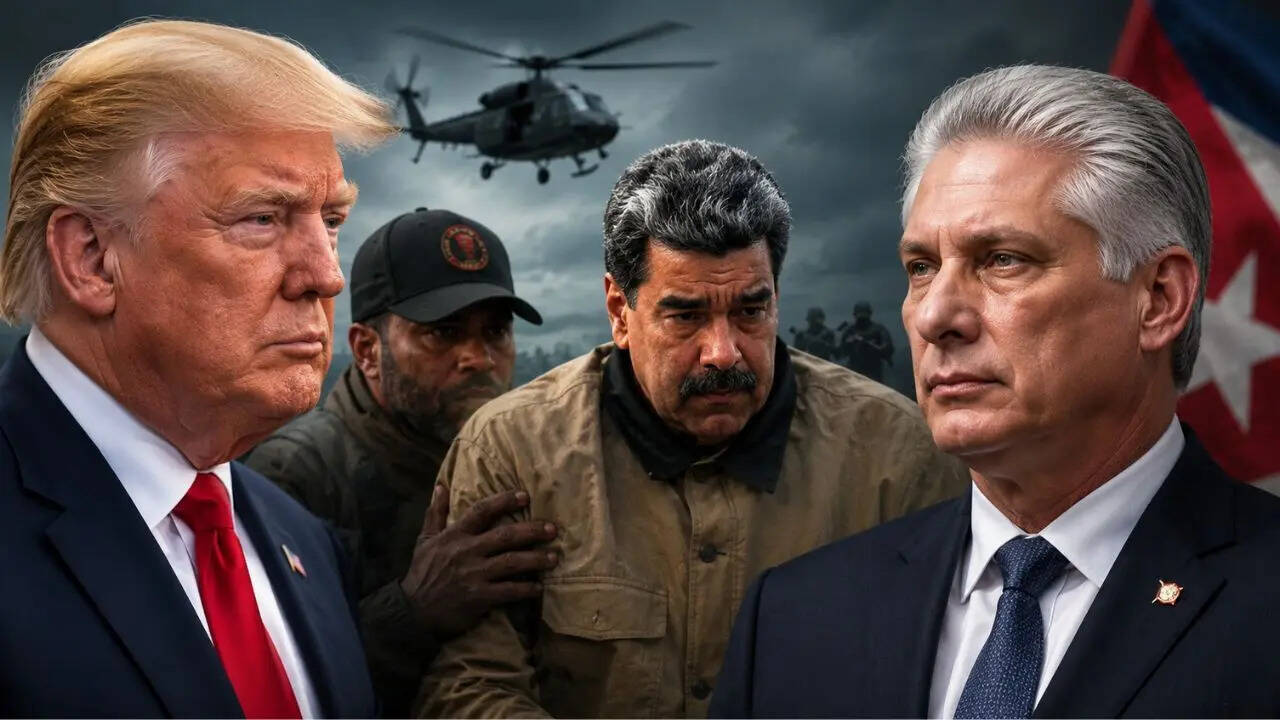
Since the inauguration of former President Donald Trump, the United States has intensified its diplomatic and economic pressure on the island nation of Cuba. The rhetoric, sanctions, and covert actions being discussed have drawn immediate comparisons to Washington’s hard‑line stance against Venezuela under Nicolás Maduro. Yet, while the parallels are tempting, a deeper look at Cuba’s political architecture and security apparatus reveals that a direct, Maduro‑style military intervention would be far more complex, perilous, and financially draining for the United States.
Why the Comparison? The Trump Administration’s Cuba Policy
Trump’s administration revived the aggressive tactics of the early 2000s, revoking the Obama‑era “Cuban Thaw” and re‑imposing travel bans, tightening sanctions on key sectors such as tourism, mining, and telecommunications, and threatening to label Cuba a state sponsor of terrorism. These moves echo the sanctions‑first approach that Washington applied to Venezuela, where economic strangulation was paired with the implicit threat of force.
Key Similarities
- Economic Leverage: Both Cuba and Venezuela rely heavily on U.S. trade and financial channels, making sanctions a potent weapon.
- Ideological Framing: Washington portrays both regimes as authoritarian outposts that threaten regional stability.
- Military Posturing: The U.S. has increased naval patrols in the Caribbean, reminiscent of the “Freedom of Navigation” operations near Venezuelan waters.
The Cuban Reality: A Different Beast
Despite surface similarities, Cuba’s internal dynamics differ markedly from those of Venezuela. While Venezuela’s oil‑rich economy provided a single point of leverage, Cuba’s economy is diversified across tourism, remittances, biotech, and a modest agricultural sector. Moreover, Cuba’s political system, though single‑party, is layered with a complex web of institutions that diffuse power and make rapid regime change difficult.
Political Structure
The Communist Party of Cuba (PCC) operates through a hierarchy that includes the Central Committee, the Politburo, and the Council of State. Decision‑making is collective, and any external shock must navigate this labyrinth. In contrast, Venezuela’s power is heavily concentrated in Maduro’s inner circle, allowing a more straightforward, albeit brutal, overthrow strategy.
Security Apparatus
Cuba’s security forces—comprising the Ministry of the Interior, the Revolutionary Armed Forces (FAR), and the State Security Directorate (DSE)—are among the most disciplined in the Western Hemisphere. They have decades of experience in counter‑insurgency, intelligence gathering, and urban warfare, honed during the Cold War and the 1960s Bay of Pigs invasion. Their readiness, combined with a pervasive surveillance network, makes any covert operation high‑risk.
Cost Analysis: What Would a Military Intervention Look Like?
Experts from the Brookings Institution and the Center for Strategic and International Studies (CSIS) have run scenario models comparing a hypothetical invasion of Cuba to the 2002‑2003 invasion of Iraq. The findings are stark:
- Financial Cost: Estimated $25‑$30 billion in direct military spending, plus long‑term reconstruction and occupation costs that could double the figure.
- Casualties: Projected U.S. troop casualties range from 500 to 1,200, with Cuban civilian casualties potentially soaring into the tens of thousands.
- Regional Fallout: A U.S. incursion would likely trigger massive protests across Latin America, galvanize anti‑U.S. sentiment, and could push Cuba closer to China and Russia.
“Cuba is not a sand‑castle that can be easily knocked down; it is a fortified citadel built on decades of ideological commitment and a tightly knit security network,” says Dr. Elena Martínez, senior fellow at the Institute for Latin American Studies.
Geopolitical Implications
China’s Belt and Road Initiative has already invested heavily in Cuban infrastructure, including a new port in Mariel and a joint biotech research center. Russia, too, has increased naval visits, positioning a cruiser in Havana’s harbor last year. An American invasion would risk a direct confrontation with these powers, potentially escalating into a broader geopolitical crisis.
Domestic Politics in the United States
Within Washington, opinions are divided. While hawks in the Senate argue that a show of force would deter other left‑leaning regimes, many legislators warn that the American public, still weary from the Afghanistan withdrawal, would reject another overseas conflict. Polls from Pew Research in early 2026 show that 62% of Americans oppose any new military action in the Caribbean.
Alternative Strategies: What Washington Could Do Instead
Given the high stakes, most analysts recommend a calibrated approach that blends pressure with diplomatic engagement:
- Targeted Sanctions: Focus on elite individuals and companies linked to human‑rights abuses, rather than blanket embargoes that hurt ordinary Cubans.
- Humanitarian Channels: Expand medical and food aid through NGOs, undermining the regime’s narrative that the U.S. is an enemy of the people.
- Regional Partnerships: Work with the Organization of American States (OAS) and Caribbean nations to create a multilateral framework for democratic reforms.
- Cyber Operations: Deploy covert cyber tools to disrupt illicit financial flows without overt kinetic action.
- Track‑II Dialogues: Encourage back‑channel talks between Cuban reformists and U.S. policymakers to build trust.
Conclusion: A Cautionary Tale
While the Trump administration’s rhetoric may echo the belligerence seen in Venezuela, the reality on the ground in Cuba makes a straight‑forward, Maduro‑style military intervention far less feasible. The island’s resilient political institutions, disciplined security forces, and growing ties to global powers create a deterrent that Washington would struggle to overcome without incurring massive costs—both financial and reputational. The wiser path, as most experts agree, is to pursue a blend of strategic pressure, diplomatic outreach, and regional cooperation, thereby avoiding a costly quagmire while still advancing U.S. interests in the Caribbean.
Source: Times of India, 23 May 2026
About the Author