Introduction
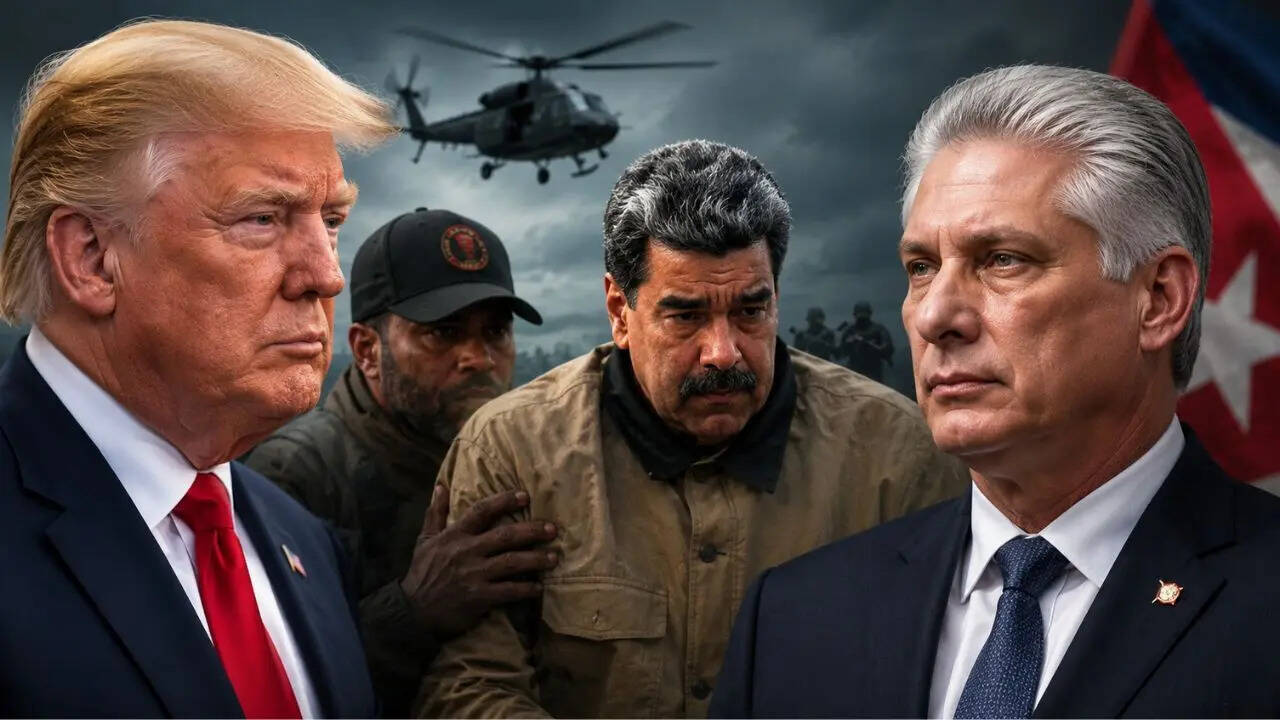
The Trump administration has intensified diplomatic and economic pressure on Cuba, prompting analysts to draw unsettling parallels with Washington’s approach to Venezuela. While the rhetoric has grown more hawkish, experts caution that a direct, Maduro‑style military intervention in Cuba would be far more complex, risky, and financially draining for the United States.
Why the Comparison to Venezuela?
In recent months the United States has taken several steps that echo its policy toward Caracas:
- Sanctions escalation: New sanctions targeting Cuban officials, state‑run enterprises, and the tourism sector mirror the punitive measures levied on Venezuelan elites.
- Diplomatic isolation: The U.S. has reduced its diplomatic staff in Havana and pushed regional partners to condemn the Cuban regime.
- Covert support for opposition: Funding for civil‑society groups and independent media mirrors the covert aid provided to Venezuelan dissidents.
These actions have sparked speculation that Washington may be preparing for a more forceful option, especially as the Cuban economy continues to falter under the weight of the embargo and pandemic‑related setbacks.
Key Differences That Make Cuba a Harder Target
Despite the surface similarities, most scholars agree that Cuba presents a fundamentally different set of challenges than Venezuela:
1. A Highly Centralized Political System
Cuba’s one‑party communist state is tightly controlled by the Communist Party of Cuba (PCC). Decision‑making resides within a small cadre of veteran revolutionaries who have overseen the island’s governance for decades. This continuity grants the regime a level of internal cohesion that Caracas lacks, where power is fragmented among military, populist, and oligarchic factions.
2. A Disciplined Security Apparatus
The Ministry of the Interior (MININT) and the Revolutionary Armed Forces (FAR) maintain an extensive network of intelligence, surveillance, and rapid‑reaction units. Their presence in every municipality, combined with a culture of political policing, makes spontaneous uprisings far less likely than in Venezuela, where security forces have frequently defected or mutinied.
3. International Backing
While Venezuela enjoys strong military ties with Russia and Iran, Cuba benefits from a longstanding partnership with the European Union, Canada, and a resurgence of diplomatic engagement with Russia and China. These relationships provide economic lifelines and diplomatic cover that would complicate any unilateral U.S. military move.
4. Geographic Proximity and Regional Sensitivities
Any large‑scale operation against Cuba would occur just 90 miles from Florida, raising the specter of a direct confrontation with a U.S. ally—Mexico—over refugee flows, as well as heightened scrutiny from the Organization of American States (OAS) and the United Nations.
Potential Costs and Risks
Analysts outline several scenarios that illustrate the steep price tag and geopolitical fallout associated with a Cuban intervention:
“A limited strike might achieve short‑term objectives, but it would likely trigger a pro‑longed insurgency, massive civilian casualties, and a costly occupation—lessons learned from Iraq and Afghanistan.” – Dr. Elena Martínez, senior fellow at the Center for Latin American Studies.
- Humanitarian fallout: Urban combat in Havana could result in high civilian casualties, prompting international condemnation.
- Economic burden: Sustaining a foreign occupation would require billions in logistics, personnel, and reconstruction—far exceeding the $1.5 billion Washington allocated for Venezuelan sanctions enforcement.
- Political backlash: Domestic opposition in the United States could intensify, especially among Hispanic voters who view Cuba as a symbol of anti‑imperialism.
- Escalation risk: A misstep could draw Russia or China into a proxy confrontation, destabilizing the broader Caribbean region.
What Washington Is Likely to Do Instead
Given these hurdles, most experts believe the United States will continue to rely on indirect pressure rather than an outright invasion:
- Economic warfare: Tightening sanctions on tourism, remittances, and the dual‑currency system.
- Information operations: Expanding broadband access and supporting independent media to erode regime legitimacy.
- Support for civil society: Funding NGOs that promote entrepreneurship, human rights, and diaspora engagement.
These tools, while slower, allow Washington to avoid the massive costs and reputational damage of a military venture.
Conclusion
Although the Trump administration’s rhetoric may echo the aggressive stance taken toward Venezuela, the reality on the ground in Cuba makes a Maduro‑style military intervention far less feasible. Cuba’s entrenched political hierarchy, disciplined security forces, and broader international support create a formidable barrier that would likely turn any U.S. operation into a protracted, costly quagmire.
For now, the United States appears poised to intensify economic and diplomatic pressure, betting that sustained sanctions and information campaigns will eventually erode the island’s resilience without the need for boots on the ground.
Source: Times of India, 23 May 2026
About the Author