Introduction: A New Cold‑War Flashpoint?
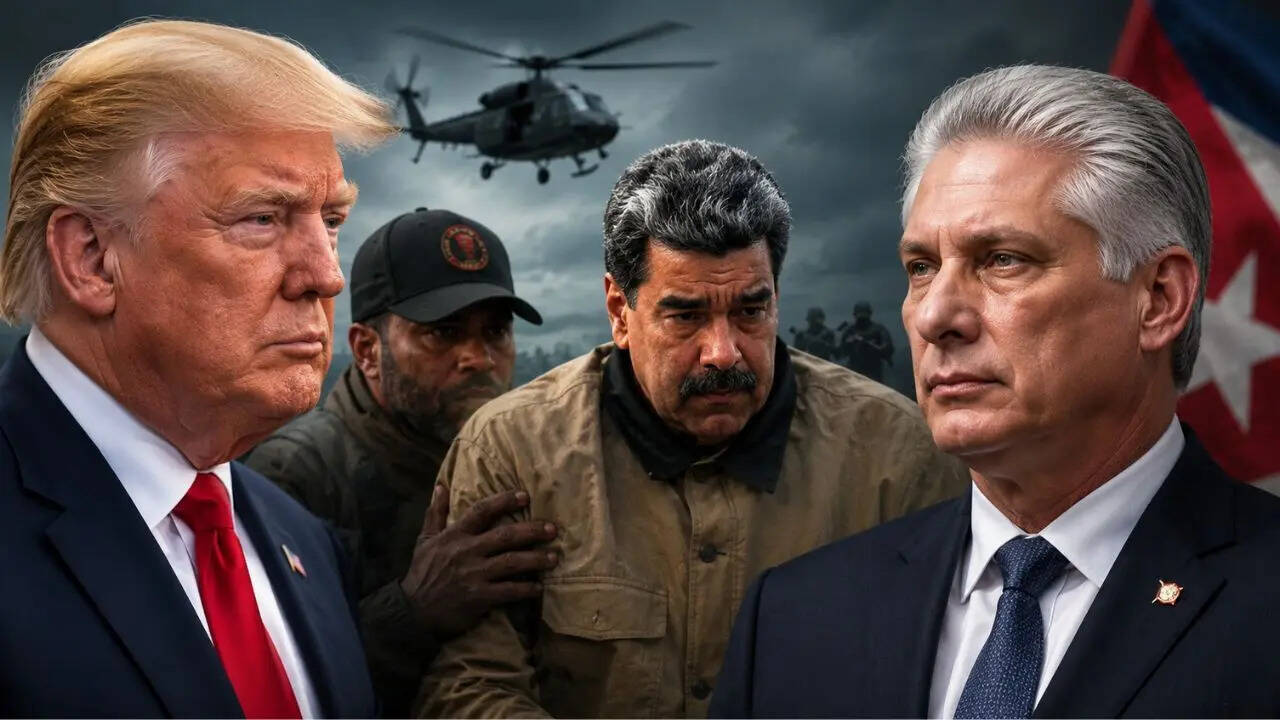
In the waning months of the Trump administration, a growing chorus of analysts and commentators began to wonder whether the United States was edging toward a Maduro‑like military intervention—this time not in Venezuela, but in Cuba. The comparison is tempting: both countries sit just 90 miles from Florida, both have endured decades of U.S. embargoes, and both are ruled by socialist governments that Washington has long deemed hostile. Yet, as the headline suggests, the reality on the ground in Cuba is far more complex, and the costs—political, military, and humanitarian—could dwarf any previous U.S. venture in the Western Hemisphere.
Why Cuba Is Different From Venezuela
At first glance, the two nations share a number of similarities: a reliance on a single‑party system, strained relations with Washington, and a history of U.S. covert operations. However, a deeper dive into Cuba’s political architecture reveals several critical distinctions:
- Unified Party Control: While Venezuela’s United Socialist Party (PSUV) has fractured under economic collapse, Cuba’s Communist Party remains a monolithic entity, tightly overseeing the military, intelligence services, and civil society.
- Integrated Security Apparatus: The Ministerio del Interior (MININT) and the Dirección de Inteligencia (DI) operate in tandem, maintaining pervasive surveillance over the population and a rapid response capability that can neutralize dissent within hours.
- Economic Resilience: Although the island’s economy suffers under sanctions, it benefits from a diversified network of medical diplomacy, tourism, and remittances that cushion it against a sudden collapse.
- Geopolitical Shield: Cuba still enjoys a degree of diplomatic cover from allies such as Russia, China, and the European Union, making any overt U.S. action likely to trigger a broader international backlash.
The Trump Administration’s Escalating Pressure
Since taking office, President Trump’s team has employed a multi‑pronged strategy to squeeze the island:
- Economic Sanctions: In early 2025, the administration expanded the embargo to include restrictions on Cuban oil imports, a move that directly hit the nation’s power grid.
- Diplomatic Isolation: The U.S. withdrew its ambassador in Havana and cut back on the limited cultural exchange programs that survived the Cold War.
- Covert Support for Opposition: Declassified cables reveal that the CIA increased funding for exile groups based in Miami, hoping to foment internal unrest.
- Military Posturing: The U.S. Navy conducted a series of Freedom‑of‑Navigation Operations (FONOPs) in the Gulf of Mexico, signaling a willingness to project power close to Cuban waters.
These actions have certainly raised the stakes, but they also illuminate a crucial point: Washington appears more interested in coercion than outright invasion.
Expert Opinions: A Costly Gamble
Security scholars from the Brookings Institution, the Council on Foreign Relations, and Cuban ex‑policy makers have weighed in on the prospect of a U.S. incursion. Their consensus is clear: a direct military intervention would be “a far riskier and potentially costlier challenge for Washington than Venezuela.”
“Cuba’s security forces are not only better trained than Venezuela’s, they are also deeply embedded in everyday life. Any attempt to dislodge the regime would likely trigger a nationwide insurgency, forcing the U.S. into a protracted, urban counter‑insurgency campaign,” says Dr. Elena García, senior fellow at the Center for Strategic Studies.
Other experts highlight the political fallout. An invasion could galvanize anti‑U.S. sentiment across Latin America, undermining decades of diplomatic progress and potentially driving other left‑leaning governments into a defensive alliance with Moscow or Beijing.
Humanitarian Concerns and Regional Stability
Beyond the strategic calculus, the humanitarian ramifications cannot be ignored. Cuba’s health system, long praised for its universal coverage, would be strained under the collateral damage of urban warfare. Moreover, the island’s aging population, many of whom rely on U.S. food‑aid programs, could face severe shortages.
Regional stability is also at stake. A U.S. operation could set a precedent for future interventions in the Caribbean, prompting neighboring nations to bolster their own militaries or seek security guarantees from non‑Western powers.
What the Future Holds
While the Trump administration’s rhetoric has grown increasingly belligerent, the practicalities of a full‑scale invasion remain daunting. Most analysts agree that Washington is more likely to continue leveraging economic levers, cyber‑operations, and diplomatic pressure rather than committing boots on the ground.
Nevertheless, the conversation itself is significant. It signals a shift in U.S. policy from a historically cautious approach toward Cuba—rooted in the 1961 embargo—to a more aggressive posture that mirrors the administration’s handling of Venezuela. As the 2026 midterm elections approach, political calculations in Washington could further influence the trajectory of this policy.
Conclusion: A Cautionary Tale
The specter of a “Maduro‑like” intervention in Cuba serves as a cautionary tale about the limits of military power in the 21st‑century geopolitical arena. Cuba’s entrenched political structure, disciplined security forces, and international allies create a formidable barrier that makes any direct U.S. action not only risky but potentially disastrous for American interests.
For policymakers, the lesson is clear: coercion must be balanced with diplomatic engagement, and the costs of a miscalculated invasion far outweigh the perceived benefits of a swift regime change.
Source: Times of India, 23 May 2026
About the Author