Russia’s Overnight Missile Barrage: A New Chapter in the Conflict
In the early hours of Sunday, May 24, 2026, the skies over Ukraine were lit up by a coordinated missile and drone assault that analysts are calling one of the most extensive uses of hypersonic weaponry since the war began. According to Ukrainian officials, the offensive involved a mix of Oreshnik hypersonic missiles, Iskander ballistic missiles, Kinzhal air‑launched hypersonics, and the sea‑based Zircon cruise missiles, all launched in what Moscow described as a “retaliatory” strike for recent Ukrainian attacks inside Russian territory.
What was used? The Arsenal of Modern Russian Missiles
- Oreshnik – A newly‑deployed hypersonic missile capable of speeds exceeding Mach 10, designed to evade modern air‑defence systems.
- Iskander – A short‑range ballistic missile with a range of up to 500 km, widely used in previous conflicts.
- Kinzhal – An air‑launched hypersonic missile with a claimed range of 2,000 km, capable of striking both ground and naval targets.
- Zircon – A stealthy, supersonic cruise missile launched from ships and submarines, known for its low radar signature.
The combination of these weapons represented a “massive, multi‑layered” attack, according to Ukrainian defence spokesperson Valeriy Heletey. The missiles were reportedly launched from several locations, including the Kaliningrad exclave, the Black Sea Fleet, and mobile launchers stationed in western Russia.
Human Cost: Casualties and Damage in Kyiv
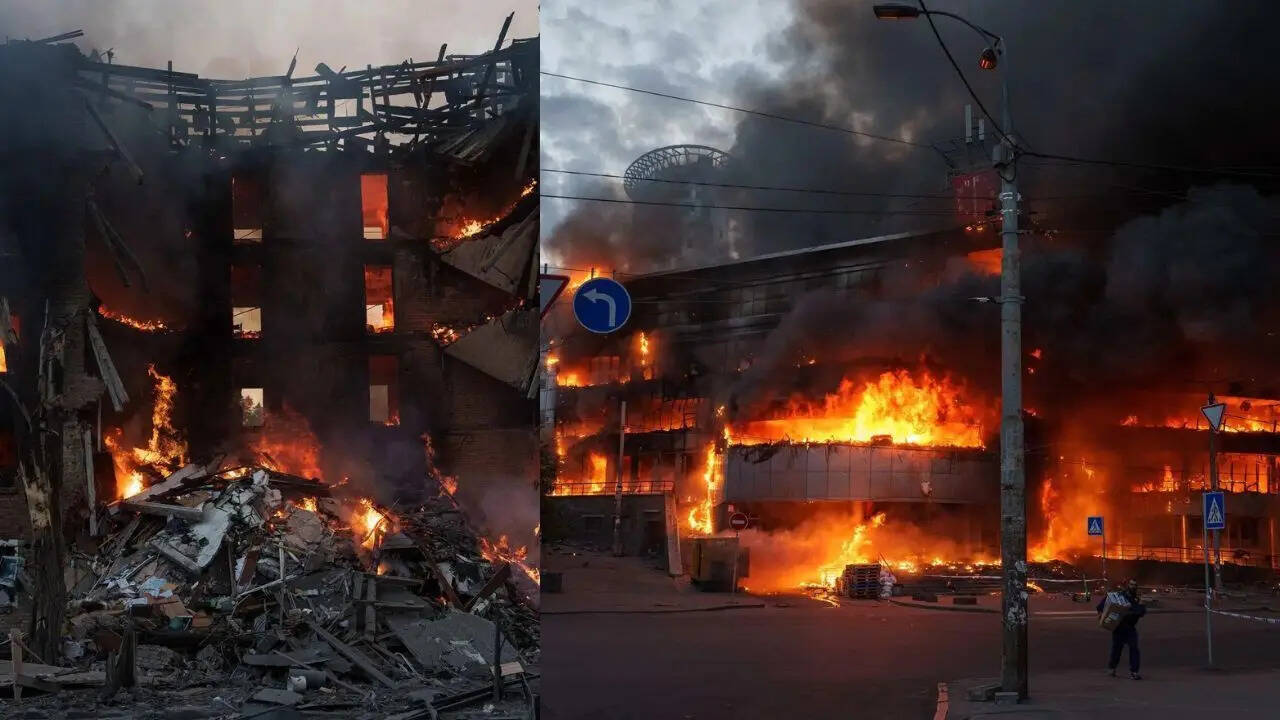
Ukrainian authorities confirmed that the strikes hit multiple districts of the capital, Kyiv, causing widespread destruction. Two civilians were killed and 56 more injured, many of them children, as residential blocks, schools and essential infrastructure were hit. Photographs shared by local journalists showed shattered windows, collapsed roofs, and smoke billowing from the remains of a primary school.
“The use of the Oreshnik missile marks a dangerous escalation. Its speed and maneuverability make it virtually impossible for our current air‑defence systems to intercept,” said President Volodymyr Zelenskyy in a televised address.
Why the Oreshnik Matters
The Oreshnik missile is Russia’s latest hypersonic offering, touted by the Kremlin as a game‑changer in modern warfare. Unlike earlier hypersonic systems, Oreshnik is believed to have a longer range and a higher payload capacity, allowing it to carry conventional warheads that can devastate entire city blocks. Its deployment in a real‑world combat scenario provides the first concrete evidence of its operational capability.
Military analysts note that the missile’s flight profile—skimming the atmosphere at extreme speeds before diving onto its target—makes it extremely difficult to track with existing radar and missile‑defence technologies. This has raised concerns among NATO members about the growing gap between offensive hypersonic capabilities and defensive counter‑measures.
Russia’s Narrative: Retaliation for Ukrainian Strikes
Moscow framed the assault as a direct response to a series of Ukrainian drone and artillery attacks that allegedly struck Russian border towns earlier in the week. The Kremlin’s spokesperson, Dmitry Peskov, stated that “the use of our most advanced weapons is a necessary step to deter further aggression and protect Russian citizens.”
However, independent observers point out that the timing and scale of the attack appear designed to send a broader strategic message, demonstrating Russia’s willingness to employ its most sophisticated weaponry in a conventional conflict setting.
International Reaction and the Hypersonic Arms Race
Western governments quickly condemned the strike. The United States Department of State called the use of hypersonic missiles “a reckless escalation that endangers civilians.” The European Union announced additional funding for Ukraine’s air‑defence modernization, emphasizing the need for systems capable of intercepting hypersonic threats.
At the same time, the incident has sparked renewed debate about the global hypersonic arms race. Countries such as China, India and France are accelerating their own hypersonic programmes, while experts warn that without a diplomatic framework, the proliferation of these weapons could increase the risk of accidental escalation.
What Lies Ahead for Ukraine’s Defences?
Ukraine’s military has been scrambling to adapt. In the days following the attack, the Ukrainian armed forces reported the deployment of additional Patriot and SAMP/T batteries to the capital, as well as the testing of new laser‑based defence prototypes supplied by allied nations.
Nonetheless, the sheer speed of hypersonic missiles leaves little reaction time. As President Zelenskyy warned, “We must invest in next‑generation technologies, or we will continue to face weapons that simply outrun our shields.”
Conclusion: A New Phase in the Russia‑Ukraine War
The deployment of the Oreshnik hypersonic missile, alongside a suite of other advanced weapons, marks a stark escalation in the Russia‑Ukraine conflict. While the immediate human toll in Kyiv was tragic, the broader implications are far‑reaching: the event underscores the urgent need for international cooperation on hypersonic defence, highlights the growing gap between offensive and defensive technologies, and sets a concerning precedent for future conflicts.
As the world watches, the question remains whether diplomatic channels can keep pace with the rapid evolution of warfighting technology, or whether the battlefield will continue to be reshaped by weapons that move faster than the eye can see.
Source: Times of India
About the Author